DO NOT DRIVE BASED ON THESE RESULTS.. This BAC calculator provides an estimate only. By using this calculator you accept full legal responsibility for your actions and release this site from all liability.

Drunk Calculator

Most accurate BAC calculator online

Loading...

Breathalyzers

BAC Effects Chart
BAC LevelEffects & Symptoms
0.00-0.04%Sober
• Relaxation and warmth
• More talkative and less inhibited
0.04-0.08%Buzzed
• Euphoria and confidence give way to more drinking
0.08-0.12%Drunk
• Driving is illegal
• Poor judgement, balance, and reaction time
• Nausea may occur in inexperienced drinkers
0.12-0.16%Very Drunk
• Emotions unstable (anger, anxiety, or depression)
• Confusion
• Memory loss
0.16%+Blacked Out
• Memory loss
• Confusion
• Injuries
• Alcohol poisoning

How to Use Our BAC Calculator

Most BAC calculators give you a single number based on a simple formula. Ours does something different: it models your entire drinking session as a timeline, showing how your blood alcohol rises, peaks, and falls over hours — not just a snapshot.

What Makes This Calculator Different

💡 Real-Time Timeline Modeling

Instead of treating each drink as an instant event, our calculator uses sigmoid absorption curves that model how alcohol actually enters your bloodstream — gradually, not all at once. When you add multiple drinks at different times, each one gets its own absorption curve, and the calculator layers them together to produce a realistic BAC timeline you can see on an interactive graph.

Three Simple Steps

  • Step 1 — Your Info: Enter your weight, biological sex, and what time you started (or plan to start) drinking. This takes about five seconds.
  • Step 2 — Add Your Drinks: Select each drink type, size, and ABV. Add them in the order you drank (or plan to drink) them, with the time you finished each one.
  • Step 3 — See Your BAC Curve: Hit calculate and get your full results — a graph of your BAC over time plus key metrics at a glance.

Reading Your Results

  • Current BAC: Your estimated blood alcohol level right now, based on what you've entered.
  • Peak BAC: The highest point your BAC reached (or will reach if you're still absorbing).
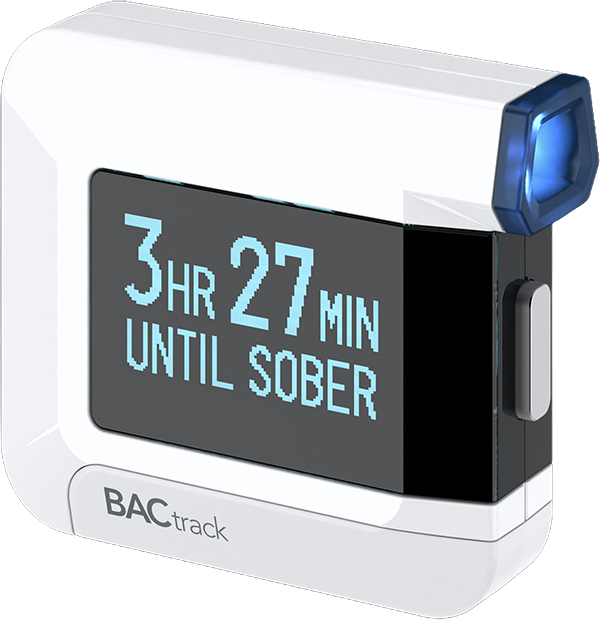
  • Time to Sober: When your BAC is projected to return to 0.00%.
  • Time Below Legal Limit: When you'll drop below 0.08% — the threshold that matters if you're planning to drive.
  • Interactive Graph: A visual curve showing your BAC from first drink through full sobriety, with the legal limit marked.

Want to understand the science behind these calculations? Read our in-depth guide on what a BAC calculator is and how it works.

Understanding BAC: What the Numbers Really Mean

BAC is reported as a percentage, but what does that percentage actually represent in your body? And how much should you trust a calculator's estimate? Here's a clear-eyed look at the science — including its limits.

What Does 0.08% BAC Actually Mean?

💡 Putting the Number in Perspective

A BAC of 0.08% means there are 0.08 grams of alcohol per 100 milliliters of your blood. Put another way, your blood is 99.92% alcohol-free. Yet that tiny fraction is enough to measurably slow your reaction time, impair your judgment, and reduce your coordination. The gap between "barely any alcohol in your blood" and "too impaired to drive safely" is remarkably small — which is exactly why tracking your BAC matters.

How Accurate Is a BAC Calculator?

No tool gives you a perfect BAC reading. Here's roughly how the options stack up, from most to least reliable:

Blood draw (lab-grade, used in legal proceedings) → Certified breathalyzer (law enforcement devices calibrated regularly) → Personal breathalyzer (consumer devices, accuracy varies by model) → BAC calculator (math-based estimate using population averages) → Counting drinks (rough mental math, ignores body differences).

Our calculator sits in the middle of that spectrum. It's significantly more accurate than guessing, but it's still an estimate — not a measurement. Use it for awareness, not as a green light to drive. For real-time measurement options, see our guide to the most accurate personal breathalyzers.

Common Myths About Getting Sober

  • "Coffee sobers you up." Caffeine can make you feel more alert, but your BAC stays exactly the same. You end up wide-awake drunk instead of sleepy drunk.
  • "A cold shower helps." Cold water is shocking, not sobering. It raises adrenaline temporarily but does nothing to your blood alcohol level.
  • "Eating after drinking absorbs the alcohol." Food slows absorption if you eat before or while drinking. Once alcohol is in your bloodstream, a late-night pizza won't lower your BAC.
  • "I can handle my alcohol, so my BAC is lower." Tolerance changes how drunk you feel, not how much alcohol is in your blood. A high-tolerance drinker at 0.10% is just as legally impaired — they just don't realize it.
  • "Fresh air clears your head." A walk outside might feel refreshing, but your liver doesn't work faster in the cold. Only time reduces your BAC.

Why Everyone's BAC Is Different

Two people of the same weight drinking the same amount can end up with BAC levels that differ by 20–30%. The reasons are biological and varied — our calculator uses well-established population averages, but your individual result could be meaningfully higher or lower than what we estimate. For a deeper dive into the six biggest factors behind these differences, read our guide on how long being drunk actually lasts.

DUI Laws: What You Need to Know Tonight

Legal BAC limits exist because impairment starts well before most people "feel drunk." If you're planning to drive later, here's what you need to know right now.

Where the Line Is

The number most adult drivers need to know is 0.08% — that's the per se limit in 49 states, meaning you can be charged regardless of how sober you feel. But the limit you're actually held to depends on who you are: commercial drivers face a stricter threshold, Utah enforces a lower one than the rest of the country, and if you're under 21, virtually any detectable amount counts. The details vary — our guide on BAC levels and penalties covers the specifics by state and category.

How This Calculator Helps You Stay Legal

After you run your calculation, look at the interactive graph: the 0.08% legal threshold is marked as a horizontal line across the chart. If your BAC curve crosses above that line, the "Time Below Legal Limit" metric tells you exactly when your estimated BAC will drop back under 0.08%. This gives you a concrete, time-based answer to the question most people are actually asking: "When can I drive?"

The Real Cost of a DUI

⚠️ It Costs More Than You Think

People focus on the fine, but that's the smallest part. A first-offense DUI triggers a cascade of costs that most people never see coming: lawyer fees, mandatory classes, license reinstatement, ignition interlock rental, years of inflated insurance premiums, and lost income from court dates or jail time. The total routinely shocks people. Our full DUI penalty breakdown walks through every line item by state.

The Trend Toward Stricter Limits

Legal limits have dropped steadily over the decades — from 0.15% in many states through the 1960s, to 0.10% in the 1980s, to the current 0.08% standard established federally in 2000. Utah pushed further to 0.05% in 2018, and other states have considered following. The trajectory is clear: as crash data reveals how impairment begins well below old thresholds, the law keeps catching up. Learn more about the history of drunk driving laws and the statistics driving these changes.

Your Alcohol Safety Checklist

Knowing your BAC is one part of staying safe. Having a plan is the other. Use this checklist before, during, and after drinking to protect yourself and the people around you.

Before You Go Out

  • Designate a sober driver before anyone starts drinking — not "whoever feels most sober" at the end of the night
  • Download rideshare apps (Uber, Lyft) and add payment info in advance so they're ready when you need them
  • Save local taxi numbers in your phone and keep cash for cab fare as a backup
  • Check public transit schedules for your route home — know when the last bus or train runs
  • Arrange a place to stay if driving isn't an option — a friend's couch or a nearby hotel removes the temptation entirely

Not sure how different drinks will affect you? Check our guides to beer, wine, and liquor alcohol content, or read our tips on drinking without getting drunk.

Signs You Should Stop

  • Set your limit before you start — decide on a number ("two drinks tonight") while you're still sober, then stick to it
  • Dizziness, nausea, or slurred speech mean your body is telling you to stop — listen to it
  • Loss of coordination or confusion are signs of significant impairment, even if you "feel fine"
  • If you can't remember your limit or keep losing count, you've already passed it

Helping Someone Who's Had Too Much

🚨 When to Call 911

Call emergency services immediately if someone:

  • Cannot be awakened or is unconscious
  • Is vomiting while passed out or semi-conscious
  • Has slow or irregular breathing (fewer than 8 breaths per minute, or 10+ second gaps)
  • Has blue-tinged or pale skin, or low body temperature
  • Has a seizure

Don't wait for "all" the signs — even one is enough to call. Most states have medical amnesty laws that protect callers from minor legal consequences.

  • Turn them on their side (recovery position) to prevent choking if they vomit
  • When you call 911, tell the operator how much they drank, when they had their last drink, and whether they took any other substances
  • Stay with them until help arrives — never leave an intoxicated person alone to "sleep it off"

Getting Help

If you or someone you know needs help with alcohol use:

  • SAMHSA National Helpline: 1-800-662-4357
    (24/7, free, confidential) Treatment referral and information service
  • National Institute on Alcohol Abuse and Alcoholism (NIAAA): Research, resources, and treatment information
  • Alcoholics Anonymous (AA): Find local meetings and support groups
  • SMART Recovery: Science-based addiction recovery support

💡 Dealing with Hiccups

Drunk hiccups are common and annoying. While not dangerous, persistent hiccups can indicate you've had too much too fast. Read our guide on how to stop drunk hiccups and when they might signal a problem.

⚠️ Know the Limits of Any Tool

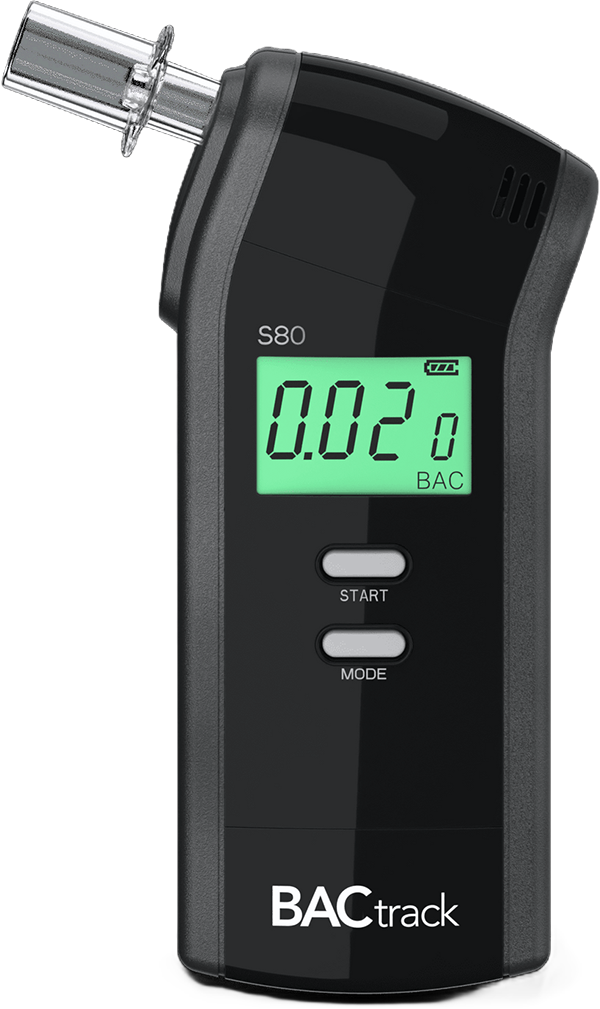
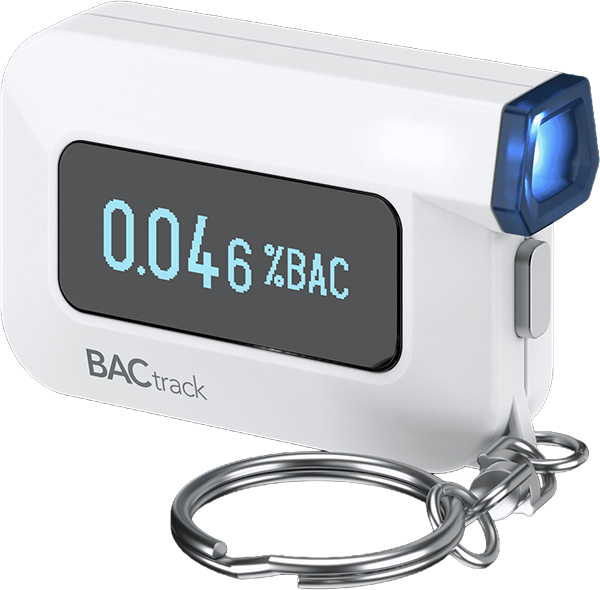
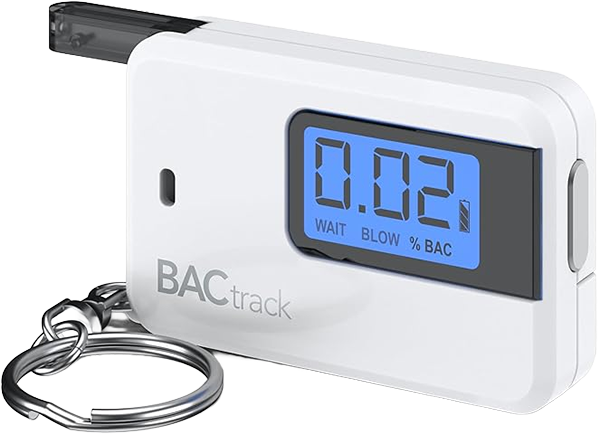
Neither this calculator nor a personal breathalyzer can tell you with certainty whether you're safe to drive. They're awareness tools, not permission slips. When in doubt, don't drive. The statistics on drunk driving deaths show what's at stake, and our breathalyzer guide can help you choose a reliable personal device if you want a real-time measurement.

Most People Underestimate How Much They're Drinking

You had "two drinks." But the first was a 16oz craft IPA at 8% ABV — that's actually two standard drinks in one glass. The second was a generous pour of wine that filled most of a large glass — another two standard drinks. Your "two drinks" were actually four, and your BAC is double what you assumed.

This is the most common mistake people make with alcohol: confusing the number of glasses with the number of drinks. A solo cup of jungle juice, a heavy-handed margarita, or a tall boy from the gas station can each contain two to three standard drinks without looking any different from a single serving. This is exactly why we built this calculator — to close the gap between what you think you drank and what your body is actually processing.

Know Your Drink: Complete Guides

Hard Seltzers & Ready-to-Drink

Classic Beverages

For a complete breakdown of standard drink sizes across every category, see our full guide to alcohol content in different drinks.

How Long Until You're Sober?

Most people are surprised by the answer. A night of heavy drinking can leave you legally impaired well into the next afternoon — long after you "feel fine." Our guide on how long being drunk actually lasts breaks down the real timeline and why morning-after driving catches so many people off guard.